
The honest answer is: it depends on what you weld, how many you weld, and how tight your quality limits are. A servo machine usually pays back faster on high-volume, tight-tolerance, leak-critical parts, because it controls amplitude, frequency, and collapse far more precisely. A hydraulic machine can still be the right buy for large, simple parts at lower volumes.
Do not buy on the drive type alone. Buy on the cost of a bad part. If a leak failure, a rejected lot, or a field return costs far more than the machine price difference, control and repeatability are worth paying for. If your parts are large and forgiving, welded in modest numbers, they may not be.
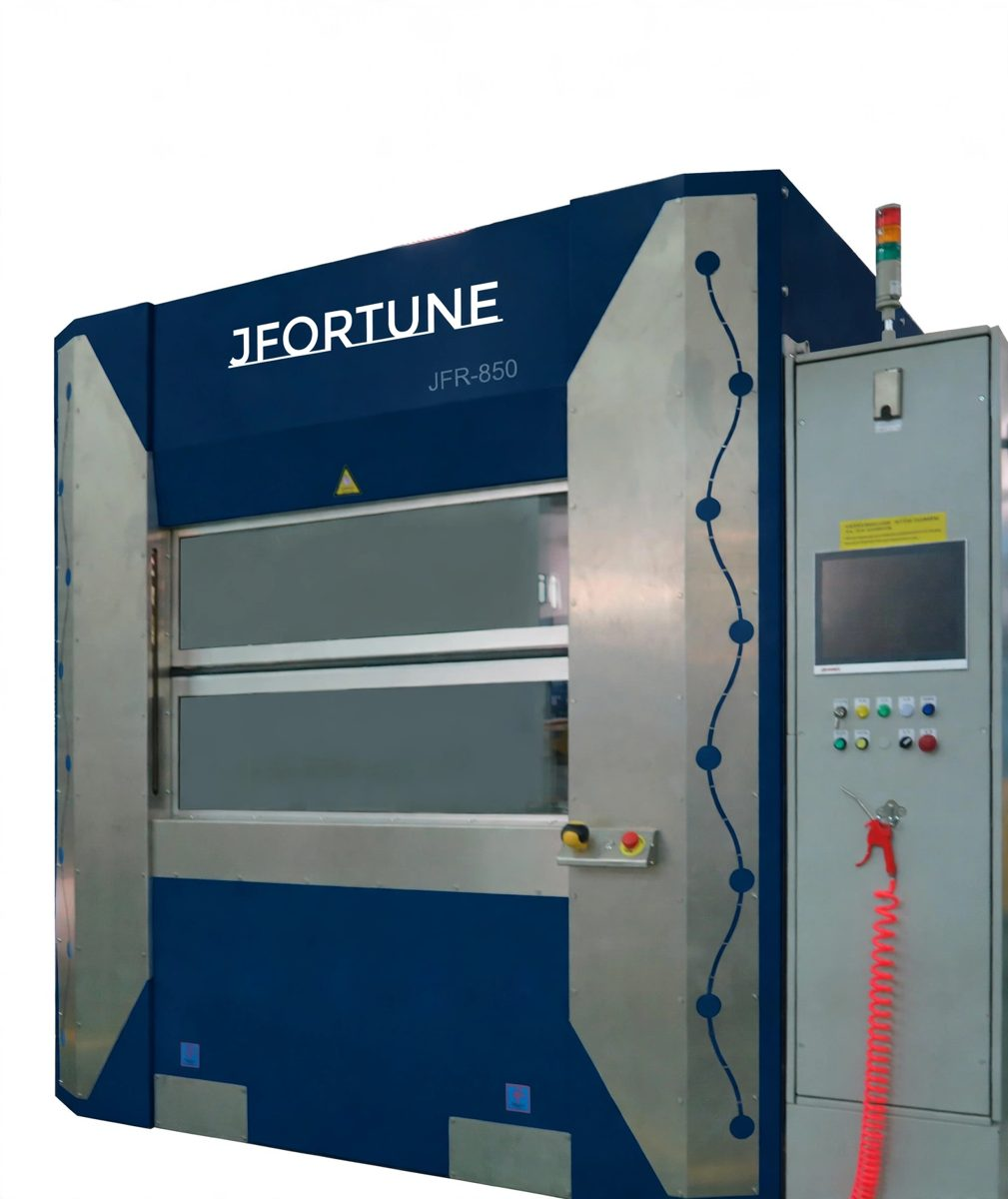
Servo vs Hydraulic at a Glance
This table compares the two drives on the factors that actually decide payback. “Better” means better for most high-volume quality-critical work, not better in every case.
| Factor | Servo drive | Hydraulic drive |
|---|---|---|
| Amplitude control | Set directly; held precisely | Set indirectly; drifts with oil temperature |
| Frequency control | Stable; set in small steps | Less precise; depends on pump and valves |
| Collapse control | Measured and limited directly | Harder to hold tight |
| Repeatability | High; part-to-part variation is low | Lower; more variation across a shift |
| Changeover | Recipe change on screen | More manual adjustment |
| Energy use | Power on demand | Pump draws power continuously |
| Maintenance | Fewer wear parts; no oil | Oil, seals, filters need upkeep |
| Purchase price | Typically higher | Typically lower |
| Best fit | Leak-critical, tight-tolerance, high-volume parts | Large, simple parts at lower volumes |
What a Servo Drive Actually Buys You
A servo drive buys control you can measure. On the Jfortune JFR-850, a 7.1 kW servo motor drives the vibration head, with frequency at 210–250 Hz and amplitude at 0.6–1.8 mm. The control holds those settings through the weld, so the first part of a shift and the last see the same amplitude.
Collapse control is where servo earns its keep. The control measures how far the parts close and stops the weld at a set collapse, rather than relying on time alone. Time-based welding assumes every part melts at the same rate. Parts do not — resin batches, warpage, and temperature all vary.
Recipe changeover is the second payback driver. A servo machine stores the full recipe — frequency, amplitude, pressure profile, collapse limit, and hold — and recalls it for the next job. Changeover becomes a screen selection and a tooling change, not a morning of trial parts.
The third benefit is data. A servo control records collapse, weld time, and amplitude for each part, so you can plot drift, prove process stability to a customer, and trace a failure to a specific shift or batch.
What Hydraulic Still Does Well
Hydraulic drive is not obsolete. It is a proven way to move a large vibration head, often at a lower purchase price than a servo machine of the same size. If your parts are large, your joint is forgiving, and your quality limit is strength rather than a tight leak rate, hydraulic may weld them well for years.
Hydraulic machines are also familiar to many maintenance teams. Pumps, valves, seals, and oil are known quantities, and spares are widely available. That familiarity has value — provided the plant accepts the upkeep: leaks, filter changes, seal wear, and oil temperature drift.
The weakness is not force. It is consistency. Oil warms up, viscosity changes, and amplitude can drift with it. A hydraulic machine that welds well at 9 a.m. may weld differently at 3 p.m. That drift is manageable with warm-up routines, but it is work the servo drive does not need.
Payback: Do the Maths With Your Own Numbers
Payback is not the machine price. It is the machine price divided by what the better machine saves you each year. Work it out with your own figures, and be honest about each one.
Start with scrap and rework. Take your current reject rate, in parts per thousand, and multiply it by parts welded per year and by the full cost of a bad part — material, labour, rework, and any customer charge. If a servo machine cuts that rate, the saving recurs every year.
Next, add changeover time. Multiply the hours saved per changeover by the number of changeovers per year and by your loaded labour and machine rate. A machine that saves an hour per changeover, three times a week, saves far more than a machine that saves ten minutes once a month.
Then add energy and maintenance, but keep them in proportion. A servo drive draws power on demand, while a hydraulic pump draws power whenever it runs. The difference is real, but usually smaller than the scrap and changeover numbers.
Finally, add the cost of a quality failure that reaches the customer. One field return, one rejected lot, or one lost order can exceed the price difference between the two machines. Price that risk honestly instead of leaving it out.
A worked example helps, but only with your numbers in it. Take the machine price difference, divide it by the annual saving from scrap, changeover, energy, and maintenance, and you have payback in years. Under two years, servo is usually right. Over five, hydraulic deserves a serious look.
For the cost factors in more detail, read the complete guide to vibration welding cost and the comprehensive guide to vibration welding.
When to Choose Which
Choose servo when the part is leak-critical, the tolerance is tight, volumes are high, you run several part numbers on one machine, or a customer asks for process data and traceability. In those cases the control is not a luxury. It is the thing that keeps the process inside its limits.
Choose hydraulic when the part is large and simple, the joint is forgiving, volumes are modest, changeovers are rare, and the budget is the binding constraint. In those cases the lower purchase price is a genuine advantage, and the precision you give up is precision you were not using.
Be wary of two traps. The first is buying hydraulic for a leak-critical part because the machine is cheaper, then paying for it in scrap and sorting for years. The second is buying servo for a simple part and never using the collapse control or data it provides.
What to Check Before You Buy Either
Whichever drive you choose, trial it with your parts. Send the supplier your drawings, resin grades, and weld geometry, and ask for a trial on your actual parts, not on a sample block. Ask for sectioned joints, collapse readings, and leak results from the trial, not only photographs of the outside.
Check the machine’s working envelope against your parts. On the JFR-850, the drive plate is 1000×550 mm and tooling weight is 40–70 kg, with input at 460 VAC, control at 24 VDC, power consumption of 37 kW, and air supply at 0.6 MPa. Confirm your part and tooling fit, and your plant can supply the power and air.
Ask how the machine is set up and changed over, who in your plant will maintain it, and what spares and support the supplier provides. A machine no one in your plant can maintain is a machine that will stop at the worst time.
For day-to-day operation, see the servo vibration welding machine operation guide and infrared preheat vibration welding.
Frequently Asked Questions
Is a servo vibration welding machine always better?
No. Servo is better where control, repeatability, and data matter — leak-critical, tight-tolerance, or high-volume work. For large, simple parts at lower volumes, a hydraulic machine can weld well at a lower price.
Does servo use less energy than hydraulic?
Typically yes, because a servo drive draws power on demand while a hydraulic pump draws power whenever it runs. The saving is real but usually smaller than savings from less scrap and faster changeovers.
Can a hydraulic machine hold a tight leak rate?
It can, with good tooling, a stable process, warm-up routines, and monitoring — but it takes more effort to hold it across a shift, because amplitude can drift as oil temperature changes.
How long does it take to change over a servo machine?
Faster than a hydraulic machine in most cases, because the full recipe is stored and recalled on screen. The tooling change still takes the same time. The saving is in setup and trial parts.
Should I trial both types before deciding?
Yes, if the choice is close. Trial your actual parts on both, section the joints, leak-test the results, and compare collapse stability across a run. A trial answers the question better than a specification sheet.
Get an Engineering Review
If you are choosing between a servo and a hydraulic vibration welding machine, send Jfortune your part drawings, resin grades, weld geometry, leak or strength requirements, and target cycle time. Our team will review which drive fits your parts and volumes, and where the payback comes from.
 EN
 DE
 ES
 PT
 RU
 JA
 IT
 AR
 KO