
Hot press and cold press equipment controls a thermal forming or bonding cycle in two stages: heat and pressure activate the material or adhesive, then cooling under controlled shape stabilizes the assembly. For shoe uppers and layered components, the machine must be designed around the exact laminate, mold surface, target geometry, cooling method and appearance standard.
Terminology: High-frequency (HF) welding is also known as radio-frequency (RF) welding. In this guide, HF refers to the plastic welding process.
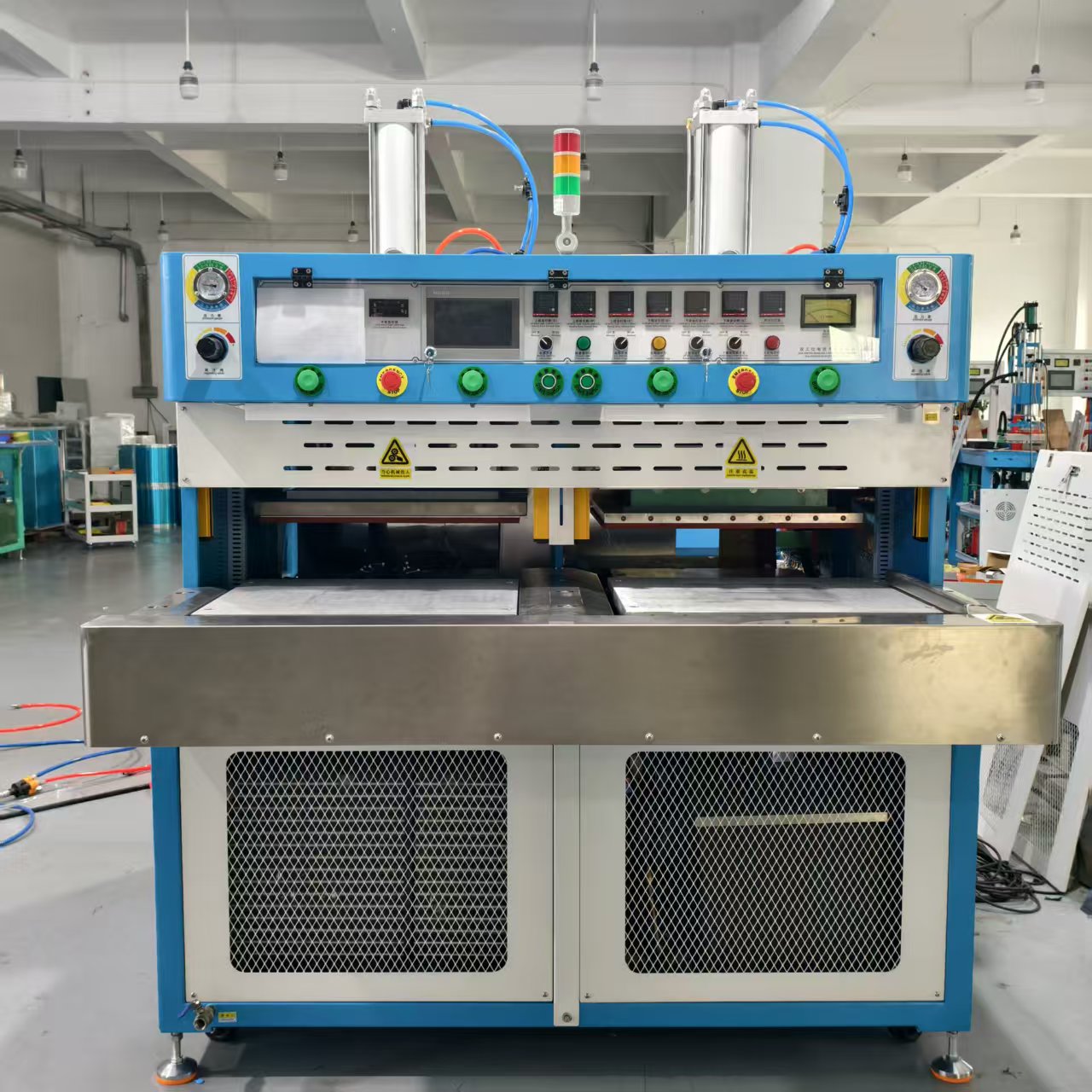
Hot and Cold Press Equipment at a Glance
- Hot stage: transfers controlled heat through a platen or shaped mold while pressure seats the layers
- Cold stage: removes heat while maintaining geometry so the part can stabilize before release
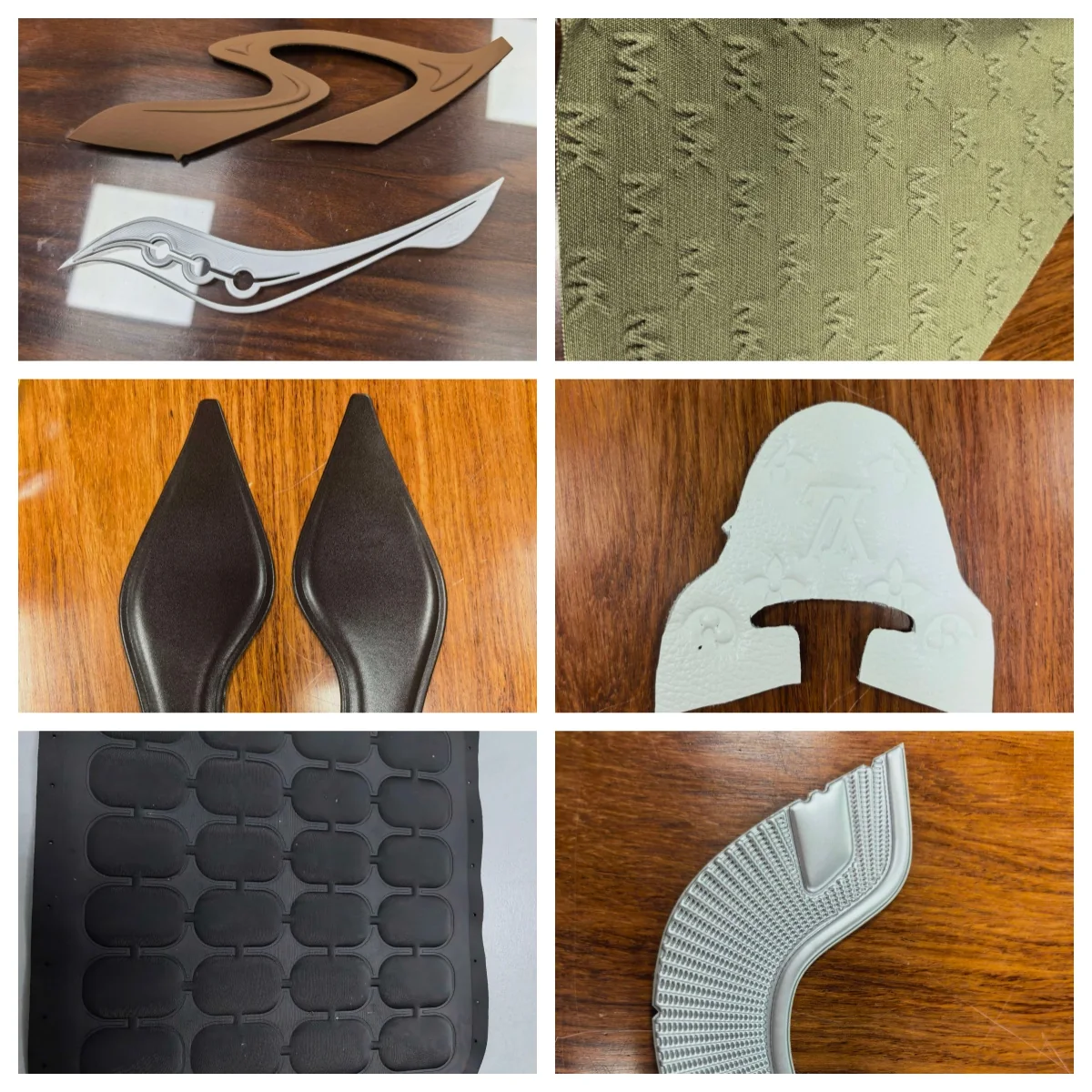
- Typical products: shoe uppers, no-sew laminates, logos, decorative panels, leather and textile assemblies
- Main controls: tool temperature, pressure, dwell, transfer time, cooling temperature and recipe selection
- Design basis: actual material stack, adhesive system, mold, cosmetic limits and production cycle
What a Hot Press Does
A hot press transfers heat from an electrically heated platen or shaped tool into the workpiece by conduction. Pressure brings the layers into intimate contact, forms the component and can activate a heat-sensitive adhesive film. The process may also create decorative texture, simulated stitching or a defined three-dimensional contour.
Unlike HF welding, a hot press does not depend on dielectric heating at 27.12 MHz. It can therefore process a wider range of materials, but heat must travel from the tool surface into the stack. Thick foam, insulating textiles and complex contours may need staged heating or a carefully balanced dwell time to avoid a hot surface and cold interior.
Why a Cold Press Stage Matters
After the hot stage, polymers and adhesives may still be soft. If pressure is released immediately, the upper can spring back, shrink, warp or separate at an edge. A cold press maintains the intended shape while extracting heat. This can shorten the time before handling and improve dimensional stability.
Cold pressing is not simply “the same press with the heaters switched off.” The cooling circuit, mold material, water temperature, flow, condensation control and dwell must be engineered. The ideal release temperature depends on the adhesive and laminate; it should be established through trials rather than guessed from the outer tool temperature.
Three Ways to Arrange Hot and Cold Operations
Separate machines
A dedicated hot press and a dedicated cold press offer clear functions and flexible maintenance. Operators transfer the part between machines, so transfer time and positioning must be controlled. This layout can work well when several hot presses feed a smaller number of cooling stations.
Dual-station platform
A shared frame can place hot and cold tools side by side. The operator or an index mechanism moves the part from heating to cooling. The control system should identify each station, prevent recipe mismatch and account for safe loading around two press heads.
Three-station sliding or indexing system
Loading, hot pressing and cold pressing can be assigned to separate indexed positions. This supports continuous production and a defined transfer sequence. It is most valuable when station times are balanced; otherwise the longest step still determines output.
Compare Hot Pressing With HF Embossing
- Sliding-table high-frequency embossing and fusing
- High-frequency welding equipment buyer's guide
- Automotive interior HF welding machine guide
Send material data and a part drawing for a Jfortune process review.
Hot Press vs HF High Frequency Welding
| Process | How heat is created | Selection priority |
|---|---|---|
| Hot press | Conduction from a heated tool or platen | Thermal response, adhesive activation and forming behavior |
| Cold press | Extracts heat through a cooled tool while holding shape | Release temperature, dimensional stability and cooling capacity |
| HF welding | Dielectric heating inside a compatible polar material | HF compatibility, electrode area, tuning and weld requirement |
Material and Adhesive Information Comes First
Provide every layer: face textile, synthetic leather, film, foam, reinforcement, lining and adhesive. State supplier, grade, thickness and activation recommendation. “No-sew material” is not a technical specification; different hot-melt films have different activation temperature, open time, pressure sensitivity and cooling behavior.
Trials should include normal storage and humidity conditions. Moisture can create bubbles or inconsistent adhesion. Dark and light colors can respond differently to radiant preheating even when platen settings are the same. Recycled content and foam density may change compression recovery.
Tooling and Platen Uniformity
The tool must support the upper without creating pressure points on cosmetic surfaces. A flat platen suits some laminates; shaped molds are needed for three-dimensional uppers and defined contours. Vacuum forming, membrane assistance or flexible pressure pads may be considered when the geometry cannot be reached by two rigid faces alone.
Temperature uniformity should be measured across the usable tool, not only at the controller sensor. Heater zoning, insulation and tool mass affect recovery after loading. The pressure system and frame must keep the platens parallel under the approved load. For multi-cavity tools, validate the center and corners.
Temperature Control Is More Than a Setpoint
The HMI may display one temperature while the mold surface and material interface follow a different time profile. During process development, use suitable sensors to understand warm-up, loaded temperature drop and recovery. Define the ready-to-run condition so production does not begin before the tool is stable.
Pressure and Part Support
Pressure must seat the layers and transfer heat without crushing the structure. The value at the cylinder or regulator must be related to actual tool area. A large mold at the same line pressure can produce a different interface pressure from a small mold.
Use locating features that control the upper without stretching it. Soft pads and replaceable covers can protect a visible surface, but they also change heat transfer. Tooling materials and surface treatments should be part of the validated process, not changed casually during maintenance.
Cooling System Design
A cold tool may use circulating water connected to a chiller or plant system. Specify inlet temperature, flow, pressure, water quality and heat load. If the surface operates below the local dew point, condensation can wet the product or corrode the tool. Insulation, drainage and a realistic minimum temperature help manage this risk.
The cold dwell should end when the part is stable enough for release, not merely after an arbitrary timer. For demanding geometry, Jfortune can evaluate a part-temperature or validated time-based endpoint. The production plan should include chiller recovery during continuous cycles.
Automation and Recipe Management
A multi-station system can index nests automatically, but sensors should confirm tool position, part presence and press status at every step. Recipes should link the hot temperature, dwell, pressure, cold time and station sequence to a part number. Barcode validation is useful when visually similar uppers require different settings.
Quality Tests for Shoe-Upper Pressing
- Peel or bond-strength test after the agreed conditioning period.
- Dimensional check against a fixture or released profile.
- Visual inspection for bubbles, wrinkles, gloss change, color shift and tool marks.
- Edge review for adhesive squeeze-out, lifting and incomplete contact.
- Flexing, aging, humidity or temperature testing when required by the product specification.
Immediate appearance is not sufficient evidence of a stable bond. Define conditioning time and destructive-test frequency before FAT. If a customer standard applies, send it during quotation rather than after the machine is built.
Safety and Maintainability
Hot surfaces, cold condensate, press motion, stored pneumatic energy and automated transfer mechanisms all require control. Guarding, light curtains, two-hand controls and interlocked access are selected from the risk assessment. Temperature alarms and heater over-temperature protection should be independent enough to place the system in a safe state when a control fault occurs.
Factory Acceptance Test
Use production-representative uppers and all critical variants. Confirm warm-up time, temperature uniformity, pressure, hot dwell, transfer time, cooling performance and complete cycle time. Run enough consecutive cycles to challenge heater and chiller recovery rather than approving a single sample after a long pause.
Inspect parts after the agreed conditioning period. Demonstrate recipe changeover, wrong-part prevention, alarms, guards, emergency stops and recovery after utility interruption. Record the approved tool revision, material batch, settings, utility conditions and sample results.
Information Required for a Useful Quotation
- 2D/3D upper geometry and finished-product photos.
- Layer-by-layer materials and adhesive technical data.
- Hot-forming temperature guidance and required release condition.
- Tool surface, texture, cosmetic zones and permitted witness marks.
- Quality tests, conditioning method and acceptance limits.
- Variants, changeover plan, output target, shifts and staffing.
- Electrical, compressed-air, cooling-water and destination safety requirements.
Build the Press Cycle Around Your Actual Laminate
Jfortune can review the material stack, adhesive, hot and cold tooling, station balance, cooling capacity and acceptance plan before proposing equipment.
Frequently Asked Questions
Do all shoe uppers need both hot and cold pressing?
No. The need depends on the material, adhesive, geometry and release stability. Trials determine whether separate cooling under pressure materially improves the result.
Can one machine provide hot and cold stages?
Yes. Dual-station and indexed multi-station systems can integrate both, provided heating and cooling circuits, transfer time, tooling and safety are engineered for the cycle.
Why does the part peel after it looks good at the press?
Possible causes include insufficient interface temperature, incorrect pressure, contamination, incompatible adhesive, excessive transfer delay or release before the bond stabilizes. Test after the specified conditioning period.
Is a three-station machine always faster?
No. Output is limited by the slowest station and by loading, transfer and unloading. A time study should balance all steps before choosing the architecture.
Engineering note: temperatures, pressure, hot and cold dwell, tooling and cycle time are material-specific. Jfortune confirms them through trials and the signed technical agreement.
 EN
EN  DE
DE  ES
ES  PT
PT  RU
RU  JA
JA  IT
IT  AR
AR  KO
KO